
Metal Handrails in Marietta
National Iron Works is a family-owned Marietta shop that builds custom ironwork in-house. Welds and installation carry a 5-year warranty (powder coating not covered; not transferable).
- Family-owned and operated
- General liability insured
- 5-year warranty on all welds and installation
- Free estimates
Signs Your Handrail Needs Professional Attention
Grab your rail and push sideways. Does it give? A solid handrail shouldn’t move at all, not even a little. Any wobble means the anchors are working loose or the base plate has started to rot from underneath. We see this every single week, and nine times out of ten the homeowner tells us it started as a tiny shift they ignored for a year.
Here’s the part people miss. Rust on the top of a rail looks ugly but it’s usually surface-level. Rust at the bottom, where the post meets the step, is structural.
- The rail shifts, rocks, or rotates when you put weight on it
- Orange staining spreading out from the base onto the concrete
- Flaking or bubbling paint near the bottom six inches of a post
- Cracked or crumbling concrete around an anchor bolt
- A weld joint that’s split open or shows a hairline gap
- Rail height that feels too low, common on older Marietta homes built before current stair rail code
Georgia’s humidity and our heavy summer downpours keep exterior stoops damp for days. Water pools at the base, wicks into the anchor hole, and freezes on those handful of cold January nights. That cycle is what pops concrete loose around a bolt. So if you’re on a brick-front ranch with an exposed front stoop, check the base every spring.
Not sure whether yours is bad enough to call about? That’s pretty common. If it moves, it’s not safe – and a loose rail on a three-step entry hurts people just as badly as one on a full staircase.
Metal Handrails vs. Wood, Cable, and DIY Kits
Most folks come to us after they’ve already stood in the railing aisle at a big-box store. The kit looks fine in the box. Then they get it home.
Here’s the honest breakdown. Wood handrails look warm and they’re cheap up front, but Georgia humidity and those long wet stretches in spring work on them. The wood swells, the screws loosen in the post holes, and the rail starts to wiggle a little more each year. You can get ten good years out of a wood rail if you seal it every couple seasons. Most people don’t. Cable railing is a different animal. It’s popular on modern decks because the view stays open, but the cables need re-tensioning, and the top rail still has to be something rigid. Cable alone doesn’t give you a graspable handrail.
DIY kits are where we get the most calls. They’re built to a price point, so the posts mount with lag screws into whatever’s behind them. On a 1970s split-level in east Marietta with a brick veneer stoop, there’s often nothing solid behind that brick to grab. The kit gets installed, it feels okay for a month, then somebody leans on it hard and the anchor pulls.
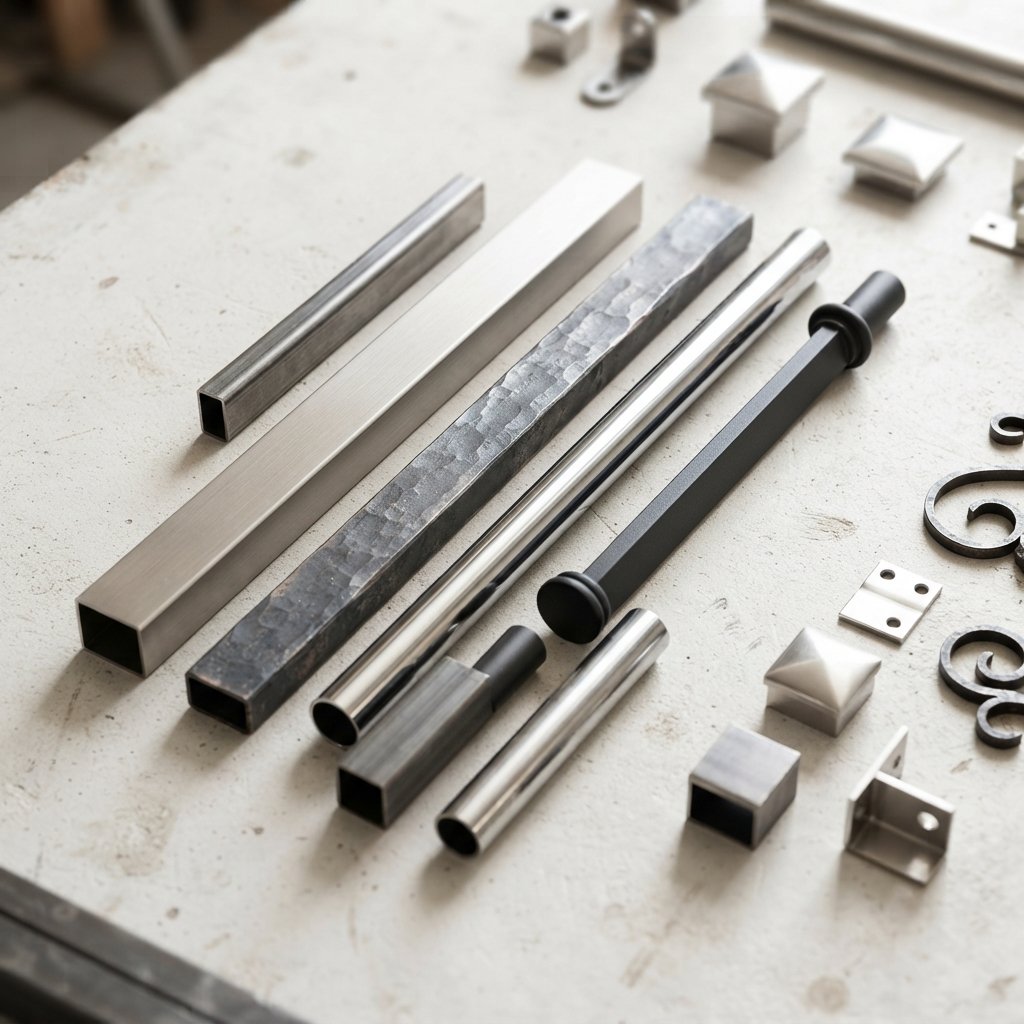
Metal handrails solve that because the rail and the mounting get built for the actual surface. Steel posts can be core-drilled and set into concrete, or plated and anchored into structural framing. And the whole thing is welded as one piece instead of bolted together from parts. Our team at National Iron Works builds them in the shop and brings them out finished.
But we’ll say this straight. If you’ve got a short interior stair with two steps and solid wall studs behind the drywall, a wood rail screwed into blocking is perfectly good. Save your money there. It’s the exterior stairs, the masonry, and anything over three risers where metal earns its keep.
See all of our metal fabrication services. Have questions? We’re happy to help. Call (770) 309-6681
Frequently Asked Questions
How do I know if my handrail needs repair or full replacement?
Check if the metal is still solid or if it’s rusted through. If you can push a screwdriver through the post or the base plate is flaking apart, you need replacement. If the steel is hard underneath surface rust and the wobble comes from loose anchors, a repair fixes it. Scrape a rusty spot with a screwdriver to test it. Most wobbly rails just need new anchors, not a whole new rail.
Are older Marietta homes more likely to have code issues with their handrails?
Yes, many older Marietta homes were built before current stair rail height codes. If your rail feels too low when you use it, that’s a common sign it doesn’t meet today’s standards. This isn’t something you fix with a repair. It usually means the rail needs to be rebuilt to the correct height and spacing to keep your stairs safe and up to code.
What should I do if I have more than one handrail problem on my property?
Get everything looked at in one visit instead of calling separately for each issue. Most shops carry a flat minimum for on-site repair work since the truck and crew cost the same whether they fix one weld or six. If you’ve got a loose post, a cracked weld, and some surface rust, bundling them together saves you multiple trip charges and gets it all handled at once.
Ready to Create Something Beautiful?
Let's bring your ironwork vision to life. Whether it's a small residential detail or a large commercial installation, National Ironworks is ready to deliver exceptional craftsmanship and timeless design.