
Ornamental Iron Railings in Marietta
National Iron Works is a family-owned Marietta shop that builds custom ironwork in-house. Welds and installation carry a 5-year warranty (powder coating not covered; not transferable).
- Family-owned and operated
- General liability insured
- 5-year warranty on all welds and installation
- Free estimates
Fixing What You Have or Building New
Ornamental ironwork covers a lot of ground. Fences, gates, railings, handrails, staircases, window guards, and one-off custom pieces all live under that same heading. If you’re new to Marietta and staring at a rusty porch rail or an empty property line, it’s not always clear what to search for.
National Iron Works is a family-owned and operated shop right here in Marietta. Matt handles the calls, estimates, and scheduling. His father owns the business and runs the fabrication side. Small team, straight answers.
Here’s the thing about this city. You’ve got older homes near the historic square with ironwork that’s been out in the weather for decades, and you’ve got newer townhomes in the growing corridors where nothing’s been built yet. Same trade, two totally different jobs. Our whole approach is matching the right service to your home’s age and what it needs.
This page covers iron railings: porch and step railings, balconies, interior stairs, and repair. For fences and gates, see our iron fences & gates page. For handrails, staircases, and one-off pieces, see metal fabrication.
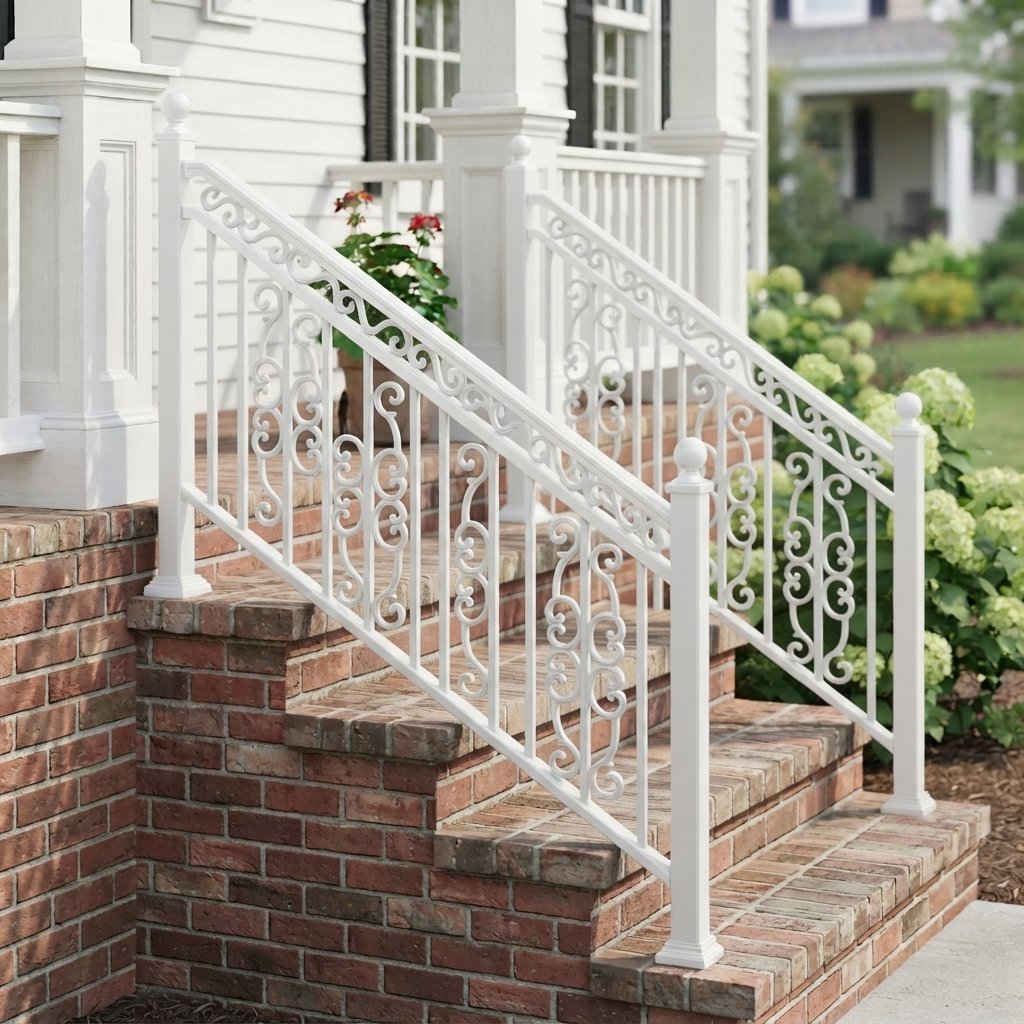
Exterior Iron Railings for Porches, Stoops, and Steps
Exterior iron railings are the guard system around an outdoor porch, stoop, deck, or set of steps. Posts, balusters, top rail – the whole assembly that keeps someone from stepping off the edge.
The difference between these and interior railings isn’t style. It’s exposure. Exterior railings sit in rain, sun, and Georgia humidity every day of the year, so the metal, the welds, and the finish all have to be chosen with rust in mind first. Interior railings get picked mostly for how they look. Out here, looks come second.
A lot of Marietta’s housing stock went up before 1990. That means a big share of the exterior railings in this city have been weathering for thirty-plus years. Some are still solid. Plenty aren’t. Common signs yours is due:
- Posts that move when you lean on them
- Rust blooming at the base where the post meets concrete
- Flaking paint with pitted metal underneath
- A top rail that’s bent or pulled loose from a post
New exterior iron railings get fabricated to your actual step and porch dimensions, not trimmed from a stock length. Steps are rarely as uniform as they look. More on exterior iron railings
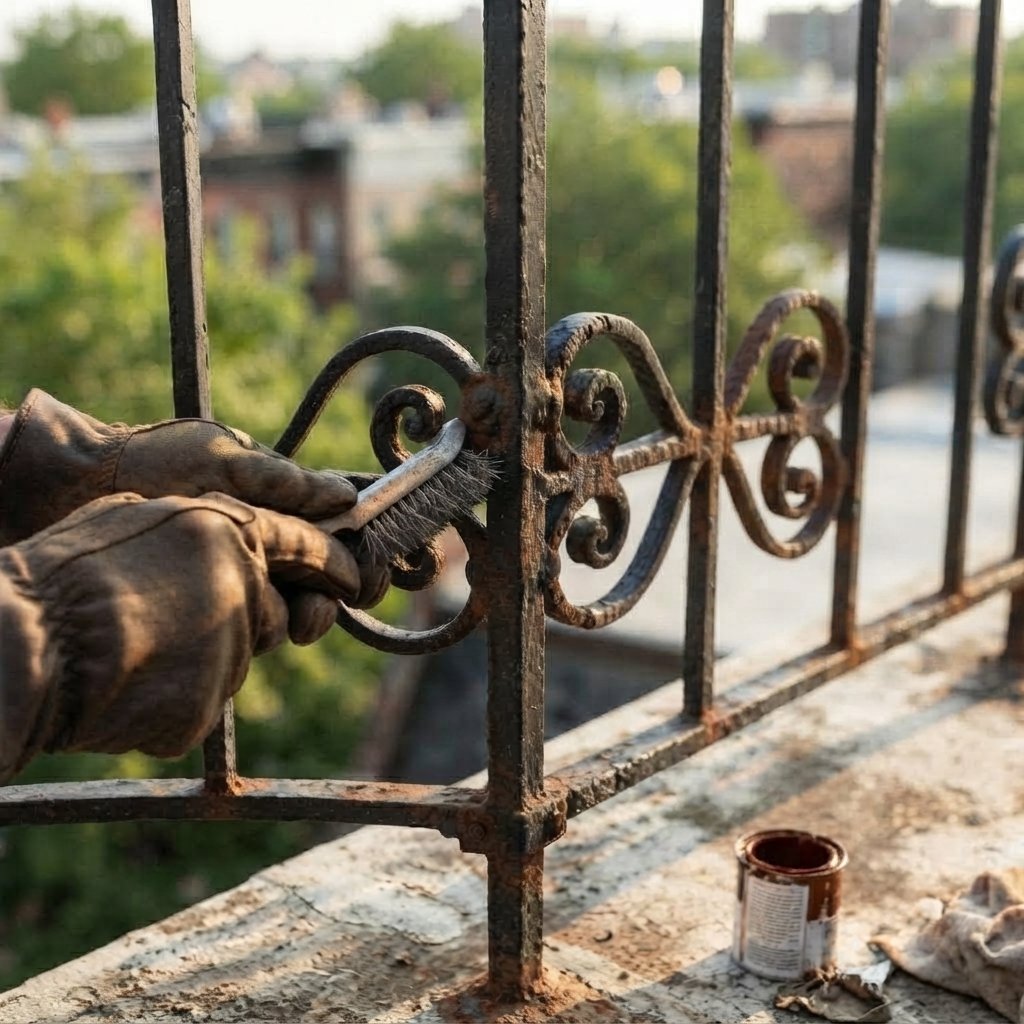
Railing Repair When Replacement Isn't Necessary
Does a wobbly railing always mean a new railing? No. Not even close. This is probably the biggest misconception we run into. A railing gets loose or shows rust, and the homeowner assumes the whole thing has to come out. A lot of the time the structure is fine and the failure is in one or two joints. Railing repair addresses what’s already there. The railing services above are new fabrication and installation.
Here’s something worth knowing if you’re new to the area. Georgia humidity attacks weld joints before it attacks the open metal. A railing can look perfectly presentable from the sidewalk while the connection points are quietly giving out. So when you’re checking a railing, grab it and shake it. Don’t just look at it. The wobble tells you more than the paint does.
Typical repair work means re-welding a cracked joint, resetting a loose post, straightening a bent rail, or treating rust before it eats through. Our minimum for on-site repairs is $450. One note on wording: railing repair is specifically about railings. If what broke is a gate hinge or some other metal fixture, welding repair is the service you want. See the full railing repair page to learn how weld and joint repair can save an aging railing.
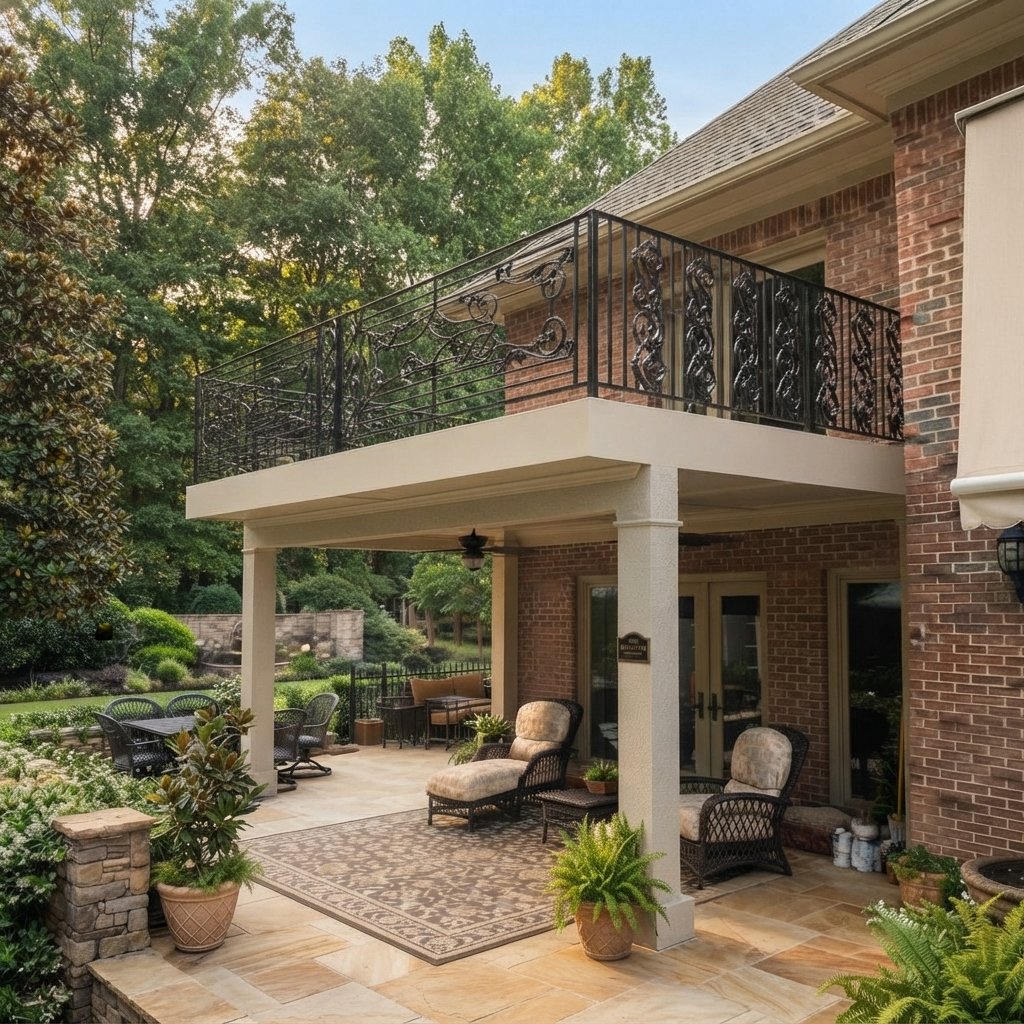
Balcony Railings for Elevated Decks and Second Stories
Downtown Marietta and the areas around it have seen a lot of townhome and condo development, and nearly every one of those units has a balcony. That’s driven steady demand for balcony railings across the city.
Balcony railings are guard systems for elevated outdoor spaces – second-story balconies, raised decks, walkout landings. The height requirement is stricter than it is at ground level for the obvious reason. A fall from a balcony isn’t a stumble.
Two things make balcony work different from a porch rail. First is the mounting. You’re anchoring into a deck frame, a concrete slab edge, or a structural wall, and each of those needs a different approach. Second is exposure. Up at elevation there’s nothing blocking wind or rain, so the finish takes a harder beating than it would on a covered front porch.
We build balcony railings to the standard heights and fabricate them to your specific opening. Balconies tend to have odd dimensions, corners, and post placements that don’t match anything standard. If you’re in a townhome or condo, check with your HOA on approved styles before you order. Saves a headache later. More on balcony railings
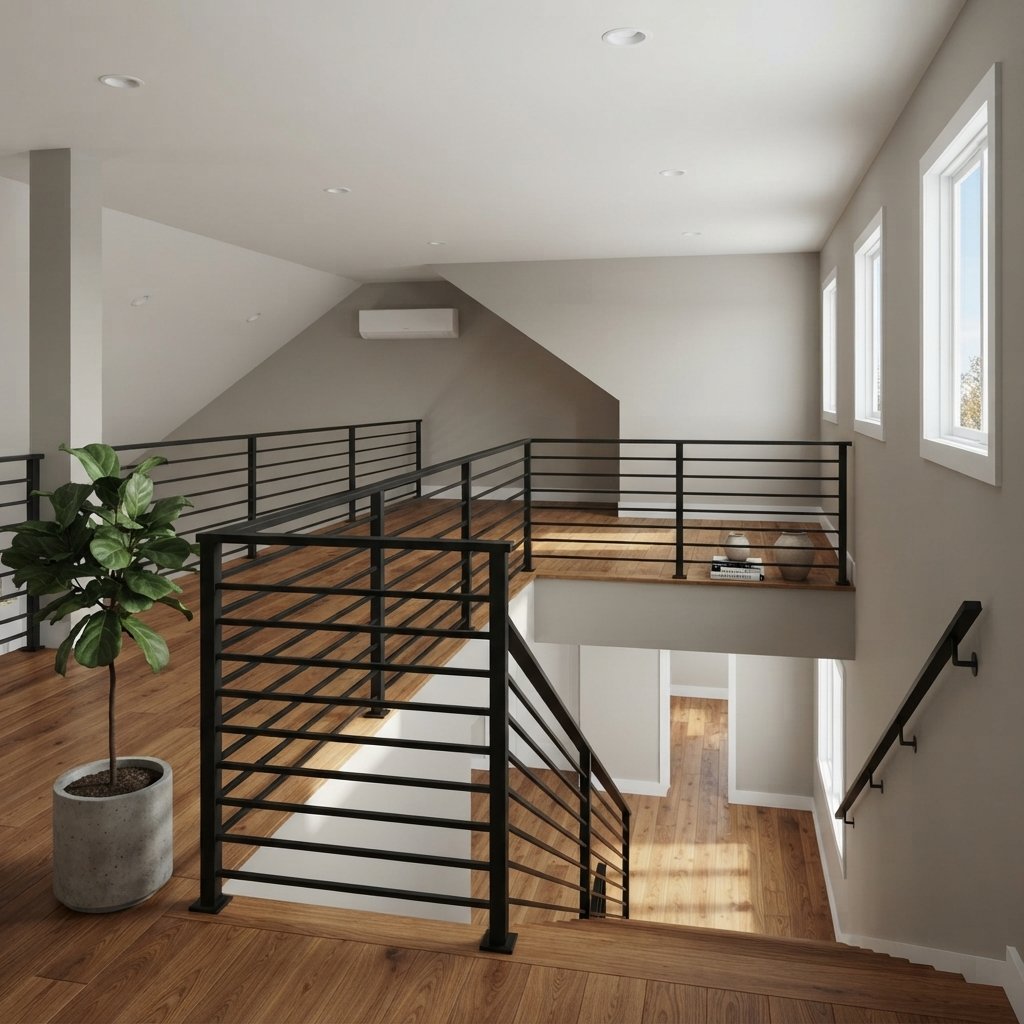
Interior Iron Railings for Stairs and Loft Edges
Picture a staircase with builder-grade wooden spindles that came with the house in 1985. Swapping those out for iron is one of the fastest ways to change how an entryway feels.
Interior iron railings go on staircases, loft edges, and open landings inside the home. Unlike exterior railings, these don’t have to fight weather. That frees up the whole design conversation. You’re choosing based on the look you want and how it sits against the rest of the house, not on what’s going to survive a rainy August.
Common interior projects include:
- Replacing wooden spindles with iron balusters on an existing staircase
- New railing along an open loft or catwalk edge
- Landing and half-wall railings on a split-level
- Decorative panels or scrollwork built into the rail
The finish work gets more attention indoors because people see it up close, every day, under interior light. Small differences in how a scroll is shaped or where a weld sits are noticeable in a way they never are on a fence line. More on interior iron railings
Frequently Asked Questions
How do I know if my railing needs repair or full replacement?
Shake it, don’t just look at it. If the wobble comes from one loose post or a cracked weld, repair usually fixes it. If multiple posts move, rust has spread through the base, or the top rail has pulled away in several spots, replacement makes more sense. Georgia humidity attacks weld joints first, so looks alone can be misleading.
How do I choose between custom ironwork and a standard fence or railing?
Custom work fits your exact property line, steps, or porch dimensions instead of stock lengths that rarely match older homes. It also lets the style match your home’s age, which matters near the historic square where mismatched profiles stand out. A stock option can work for simpler, newer properties.
What should I expect during an on-site estimate?
Matt visits your property, looks at what’s there now, and measures the actual space rather than guessing from a photo. He’ll point out whether you’re dealing with a repair, a replacement, or new fabrication. You get straight answers about what your home needs before any work starts.
Ready to Create Something Beautiful?
Let's bring your ironwork vision to life. Whether it's a small residential detail or a large commercial installation, National Ironworks is ready to deliver exceptional craftsmanship and timeless design.