
Welding Repair in Marietta
National Iron Works is a family-owned Marietta shop that builds custom ironwork in-house. Welds and installation carry a 5-year warranty (powder coating not covered; not transferable).
- Family-owned and operated
- General liability insured
- 5-year warranty on all welds and installation
- Free estimates
Signs a Broken Gate or Railing Needs Welding Repair
Push on it. That’s the first test we tell people to do. Grab the top rail and give it a firm shove. If the whole thing flexes and then settles back with a little metallic click, a joint has already let go somewhere below.
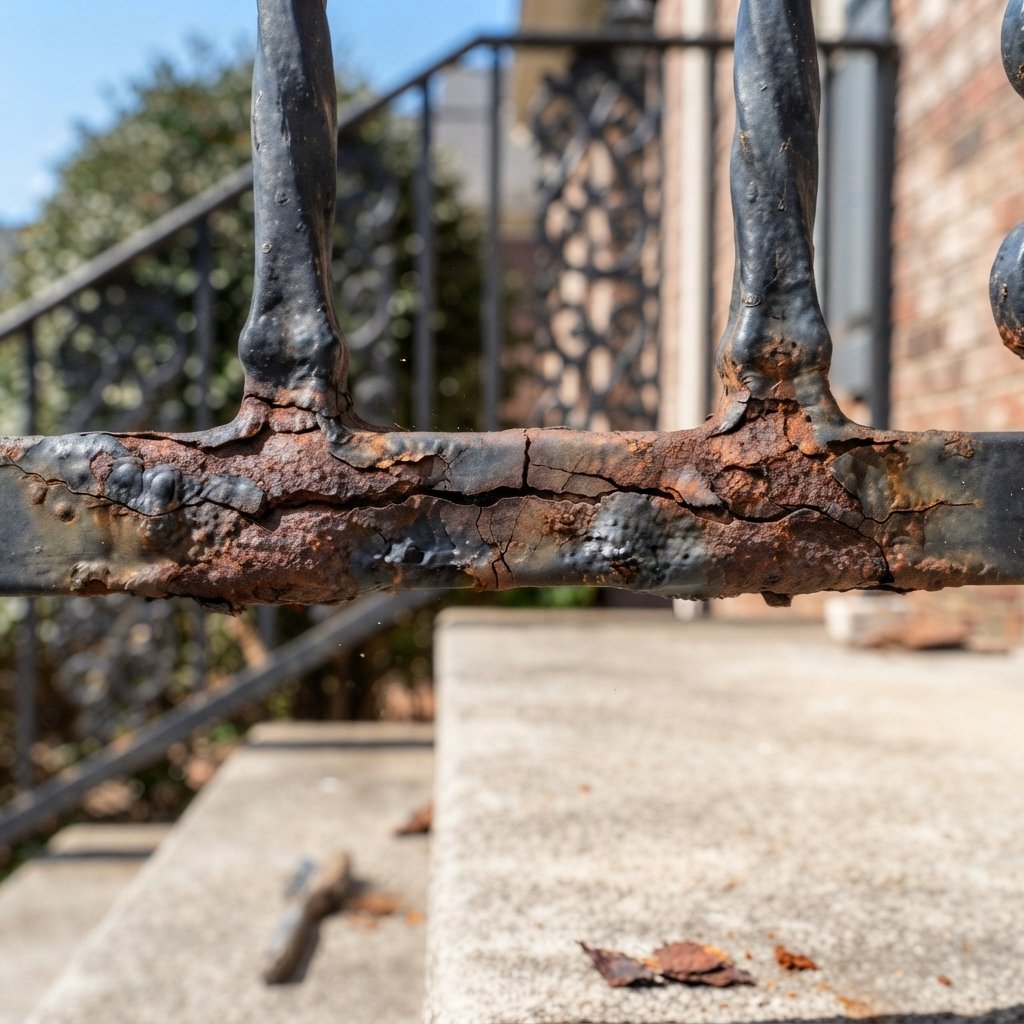
Rust stains running down your concrete are another one. Iron doesn’t bleed unless water is getting inside the metal, and around here it usually gets in at the base. Georgia humidity sits on those base plates all summer, then we get a few freeze nights that crack the seal between the post and the anchor. Water wicks in, the steel swells as it rusts, and the weld at the bottom of the post splits open. The post looks fine from three feet away. Kick it and it moves.
- A gate that drags the ground or won’t latch anymore, usually a cracked hinge weld pulling the frame out of square
- Visible hairline cracks in the paint right at a joint, paint splits before the metal does
- Orange staining at the bottom of a post or under a stair stringer connection
- A picket or baluster you can spin by hand
- Any handrail that moves more than a hair when a person leans on it
That last one matters more than folks think. A loose handrail on a deck or a set of front steps isn’t cosmetic, it’s the thing somebody grabs when they slip. We get calls every week from people who noticed the wobble months ago and finally had a guest almost go down. Not sure what your Welding Repair project needs? Ask us. (770) 309-6681
Why Welds Fail Again (and How to Stop It)
Here’s the part nobody tells you. A weld almost never fails because the weld itself was weak. It fails because something was pulling on it the whole time, and the repair never touched that.
We see this every single week. Somebody calls about a porch railing that cracked at the same post for the third time. The last two guys ground it down, laid a bead, painted over it, and left. Looked great for a season. But the post was loose in the concrete, so every time somebody leaned on that rail, the joint took the whole load. Metal doesn’t forgive that. It works back and forth until it splits again, usually within a foot of the old repair.
So before we strike an arc, we figure out what’s moving.
- A loose or shifting anchor point, so the joint absorbs movement it was never designed to handle
- Rust working from the inside of hollow tube, which hollows the metal out before you can see it on the surface
- Water sitting in a low spot or an uncapped post, a real problem on Marietta’s older exterior stairs where the original caps rusted off years ago
- A previous repair done with the wrong filler or too little penetration, leaving a joint that’s basically glued instead of fused
- Undersized material in the original build, where the section was too light for the span from day one
Georgia humidity makes the rust problem worse than folks expect. Steel that looks fine can be paper thin behind the paint. We tap it, we scrape it, we look inside the tube. If the parent metal won’t hold a weld, adding more heat just burns through and makes a bigger hole.
Fixing the cause means resetting the anchor, cutting out the rotted section, adding a gusset or a sleeve where the load concentrates. Then we weld. Then we prep and coat the bare metal so water can’t get back in. That’s the difference between a repair that holds and one you’ll be calling about next spring.
Our welds and installation carry a 5-year warranty. Powder coating finish isn’t covered, and the warranty isn’t transferable. We can stand behind the work that long because we don’t skip the part that caused the break. See all of our metal fabrication services.
Frequently Asked Questions
Can a rusted railing always be welded, or does it need to be replaced?
It depends on how much good steel is left, not how bad the rust looks. Press a screwdriver into the worst spot. If it stops solid, we can weld to it. If the tip sinks in or metal flakes off, that section has lost its thickness and welding it just builds a patch on failing metal. Multiple soft, pitted spots usually mean replacement is the honest answer.
What happens when someone comes to fix a broken gate or handrail?
We check the actual crack and the base metal thickness first, since thin rusted steel changes the whole plan. Then we grind back the old weld and paint, clamp and tack the joint, check alignment, and run the final bead before priming the bare steel. A single cracked joint often takes under two hours. Anchors pulled loose from brick take longer since the masonry needs attention too.
Does painting over a cracked weld fix the problem?
No, fresh paint only hides a cracked weld for about one season. The crack keeps growing underneath the paint the whole time, and it comes back worse than before. If you see a hairline crack in the paint right at a joint, that usually means the paint split before the metal did, and the weld underneath is already compromised.
Ready to Create Something Beautiful?
Let's bring your ironwork vision to life. Whether it's a small residential detail or a large commercial installation, National Ironworks is ready to deliver exceptional craftsmanship and timeless design.