
Wrought Iron Fencing in Marietta
National Ironwork is a family-owned Marietta shop that builds custom iron railings in-house and provides a 5-year warranty on all welds and installation; powder coating not covered; not transferable.
- Family-owned and operated
- General liability insured
- 5-year warranty on all welds and installation
- Free estimates
Repair or Replace: How to Tell the Difference
Rust scares people more than it should. Surface rust on a picket is cosmetic. That’s a Saturday, not a service call. But rust that’s eaten through the metal is a different animal. If you press a screwdriver against the spot and it goes through, that section is done. The real question isn’t rust. It’s where the damage sits. Damage at the top of a picket is almost always repairable. Damage at the base, where the post meets concrete, is the one we watch. Water sits there. Red Georgia clay holds moisture against the steel for days after a storm, and that bottom inch corrodes from the inside out while the rest of the fence still looks fine. We see this every single week on older Marietta properties where the fence was set straight into dirt instead of a proper footing.
Here’s a quick way to sort it out yourself before you call anybody.
- One or two broken pickets, rails still straight: repair. Cut out the bad section, weld in new stock, blend the finish.
- A post leaning more than an inch off plumb: pull it, check the footing, reset it.
- Three or more posts failing along the same run: the footings are the issue, and patching one at a time gets expensive fast.
- You can flex a rail by hand and hear it crack: the steel has lost its wall thickness. Replace that run.
On cost, the thing most folks don’t know is that mobile repair work carries a floor. We hold a $450 minimum for on-site repairs, and that’s normal for the trade. A truck, a welder, and a crew cost the same whether the job takes an hour or four. So if you’ve got three small problems, get them all fixed in one visit instead of three. And if the whole fence line is failing, replacement usually costs less per foot than chasing repairs across a season.

What Custom Fabrication and Installation Involve
Custom means we build your wrought iron fencing to your yard, not to a warehouse shelf. That starts with a free on-site estimate. We walk the line with you, measure it, and look at grade. Marietta lots roll. Slopes, tree roots, old retaining walls. A panel fence hits a slope and either steps up awkwardly or leaves a gap a dog can crawl through. We rack the panels in the shop so the pickets stay plumb and the top rail follows the ground.
Here’s the order things happen in.
- Free on-site estimate. We measure, mark gate spots, and talk about height and picket style.
- Utility locate. Georgia 811 gets called before anybody digs a post hole.
- Shop fabrication. Your panels and gates get cut and welded to your measurements.
- Pieces get primed and powder coated before they leave the shop.
- Post setting. Holes get dug and posts set in concrete, then left to cure.
- Hang and weld. Panels and gates get attached, and we touch up any field welds.
Gates are where most of the real work hides. A 12-foot driveway gate carries a lot of weight on two hinges. It needs heavier posts, deeper footings, and a hinge that won’t sag. We size that stuff for the actual gate, not a guess.
The question we get most is how long it takes. Fabrication runs in the shop while your posts cure, so the two overlap. Install day itself is usually quick. It’s the shop time that sets the schedule.
What do we need from you? Clear access to the fence line, and pets inside while we dig.
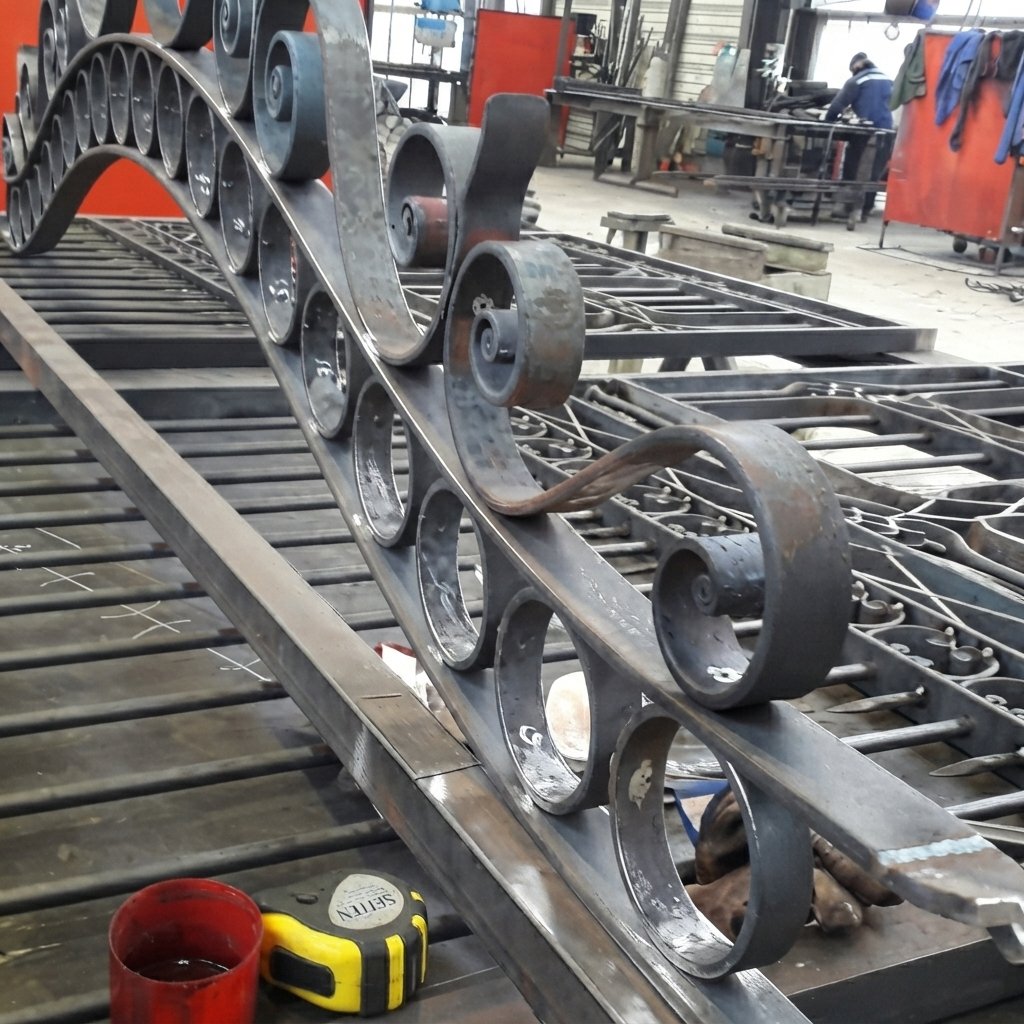
What Happens During Fabrication and Installation
Custom means we build your wrought iron fencing to your yard, not to a warehouse shelf. That starts with a free on-site estimate. We walk the line with you, measure it, and look at grade. Marietta lots roll. Slopes, tree roots, old retaining walls. A panel fence hits a slope and either steps up awkwardly or leaves a gap a dog can crawl through. We rack the panels in the shop so the pickets stay plumb and the top rail follows the ground.
Here’s the order things happen in.
- Free on-site estimate. We measure, mark gate spots, and talk about height and picket style.
- Utility locate. Georgia 811 gets called before anybody digs a post hole.
- Shop fabrication. Your panels and gates get cut and welded to your measurements.
- Pieces get primed and powder coated before they leave the shop.
- Post setting. Holes get dug and posts set in concrete, then left to cure.
- Hang and weld. Panels and gates get attached, and we touch up any field welds.
Gates are where most of the real work hides. A 12-foot driveway gate carries a lot of weight on two hinges. It needs heavier posts, deeper footings, and a hinge that won’t sag. We size that stuff for the actual gate, not a guess. The question we get most is how long it takes. Fabrication runs in the shop while your posts cure, so the two overlap. Install day itself is usually quick. It’s the shop time that sets the schedule. What do we need from you? Clear access to the fence line, and pets inside while we dig.
Frequently Asked Questions
Can I fix surface rust on my wrought iron fence myself?
Yes. Surface rust is cosmetic, and you can handle it with a wire brush, a rag, and rust-inhibiting paint from any hardware store on Roswell Road. It shows up most on the shaded north side of a fence, where the finish stays damp longer. Watch for flaking or bubbling paint. If you can push a screwdriver into a rusted spot, the metal has gone hollow and needs a real repair.
How do I know if my gate problem is a fence issue or something smaller?
A gate that drags or won’t latch is usually a hinge problem or a sagging frame corner, not a sign the whole fence is failing. Check if the hinge screws backed out or the frame shifted slightly before assuming the worst. If the post itself leans more than an inch off plumb, though, the footing likely needs to be pulled and reset, which is a bigger job.
Does wrought iron fencing work with pets and pools in Marietta?
Yes, but spacing matters more than most people realize. A puppy that fits through a four-inch gap will keep fitting through it, so we set picket spacing to your animal, not a catalog size. For pools and spas, a barrier that won’t self-latch doesn’t count as real protection. Check both before you assume your current fence is doing its job.
Ready to Create Something Beautiful?
Let's bring your ironwork vision to life. Whether it's a small residential detail or a large commercial installation, National Ironworks is ready to deliver exceptional craftsmanship and timeless design.